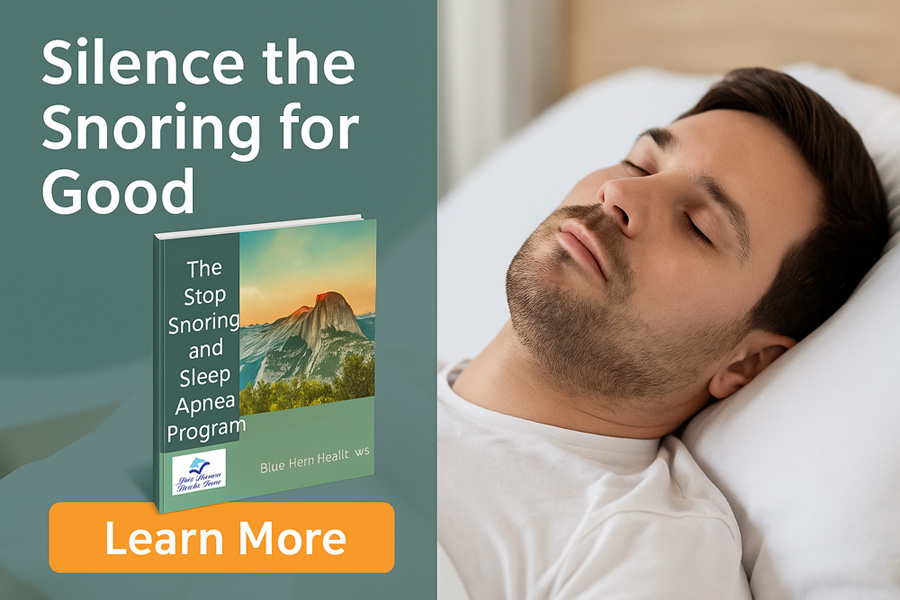
The Stop Snoring And Sleep Apnea Program™ a well-researched program created to help stop snoring and sleep apnea so that you can have a good night sleep. The techniques that you will learn from this program works immediately. It will only take you 3-7 minutes to perform these simple exercises that the author has recommended but the results that you will get will help you have a good night sleep as soon as tonight. Within a week, snoring will be a thing of the past.
What are the signs that a snoring problem may be sleep apnea?
Here are key signs that a snoring problem may be linked to sleep apnea:
Nighttime Symptoms
- Loud, Persistent Snoring: Snoring that is louder and more frequent than usual.
- Pauses in Breathing: Witnessed by a bed partner, these pauses may last several seconds to minutes.
- Gasping or Choking Sounds: Often follows pauses in breathing as the body tries to restore airflow.
- Restless Sleep: Frequent tossing, turning, or movements throughout the night.
- Frequent Awakenings: Waking up multiple times without an apparent reason.
- Night Sweats: A result of the body’s stress response to breathing interruptions.
Daytime Symptoms
- Excessive Daytime Sleepiness: Feeling unusually tired or drowsy during the day despite getting “enough” sleep.
- Morning Headaches: Caused by poor oxygenation during sleep.
- Dry Mouth or Sore Throat Upon Waking: Due to mouth breathing during sleep.
- Difficulty Concentrating: Problems with memory, focus, or mental sharpness.
- Mood Changes: Irritability, anxiety, or depression linked to sleep disturbances.
Risk Factors
- Obesity: Extra tissue in the throat can obstruct airflow.
- Large Neck Circumference: A neck size over 17 inches in men or 16 inches in women increases risk.
- Family History: A genetic predisposition to sleep apnea.
- Smoking and Alcohol Use: Both relax throat muscles, worsening airway obstruction.
- Age and Gender: More common in older adults and men, though postmenopausal women are also at risk.
What to Do If You Suspect Sleep Apnea
- Consult a Sleep Specialist: They may recommend an overnight sleep study (polysomnography) or a home sleep apnea test.
- Lifestyle Changes:
- Maintain a healthy weight.
- Avoid alcohol and sedatives before bed.
- Sleep on your side instead of your back.
- Treatment Options:
- CPAP Machine: Maintains an open airway during sleep.
- Oral Appliances: Helps keep the airway open.
- Surgical Options: In severe cases to remove excess tissue.
Would you like detailed advice on sleep-friendly lifestyle changes or more information about CPAP alternatives?
Supporting a partner with sleep apnea involves emotional, practical, and lifestyle strategies to help them manage their condition effectively. Here’s how you can be a caring and supportive partner:
1. Encourage Medical Treatment
- Gently suggest seeing a healthcare professional if your partner hasn’t been diagnosed.
- Offer to accompany them to appointments for moral support.
- Help them feel comfortable with the idea of a sleep study if needed.
2. Support Their Use of CPAP or Other Treatments
- Help with setup and maintenance of CPAP (cleaning the mask and machine).
- Be patient as they adjust to wearing the mask.
- Encourage them to explore alternative treatments like oral appliances if CPAP is challenging.
3. Adapt Sleeping Arrangements
- Reduce Disruptions: Use earplugs or a white noise machine if the CPAP noise or snoring is bothersome.
- Separate Sleeping Spaces (If Necessary): If their treatment or snoring affects your sleep, consider occasional separate sleeping arrangements to maintain your well-being.
4. Promote a Healthy Lifestyle
- Exercise Together: Encourage physical activity to maintain a healthy weight.
- Prepare Balanced Meals: Focus on reducing processed foods and sugars.
- Limit Evening Alcohol and Sedatives: These can worsen sleep apnea symptoms.
5. Provide Emotional Support
- Acknowledge that sleep apnea can be frustrating or embarrassing for your partner.
- Offer reassurance without judgment if they feel self-conscious about their CPAP or condition.
6. Stay Informed
- Learn about sleep apnea and its management. Knowledge can help you empathize and find effective ways to support them.
7. Be Patient
- Understand that treatment may take time to show full benefits.
- Celebrate small victories, like nights when they feel more rested or confident using their treatment.
Would you like specific tips for adjusting to life with a partner using CPAP or strategies to manage your own sleep while supporting them?
The Stop Snoring And Sleep Apnea Program™ a well-researched program created to help stop snoring and sleep apnea so that you can have a good night sleep. The techniques that you will learn from this program works immediately. It will only take you 3-7 minutes to perform these simple exercises that the author has recommended but the results that you will get will help you have a good night sleep as soon as tonight. Within a week, snoring will be a thing of the past.

I’m Mr.Hotsia, sharing 30 years of travel experiences with readers worldwide. This review is based on my personal journey and what I’ve learned along the way. Learn more |