How to Read a Weight Trend When the Scale Moves Day to Day
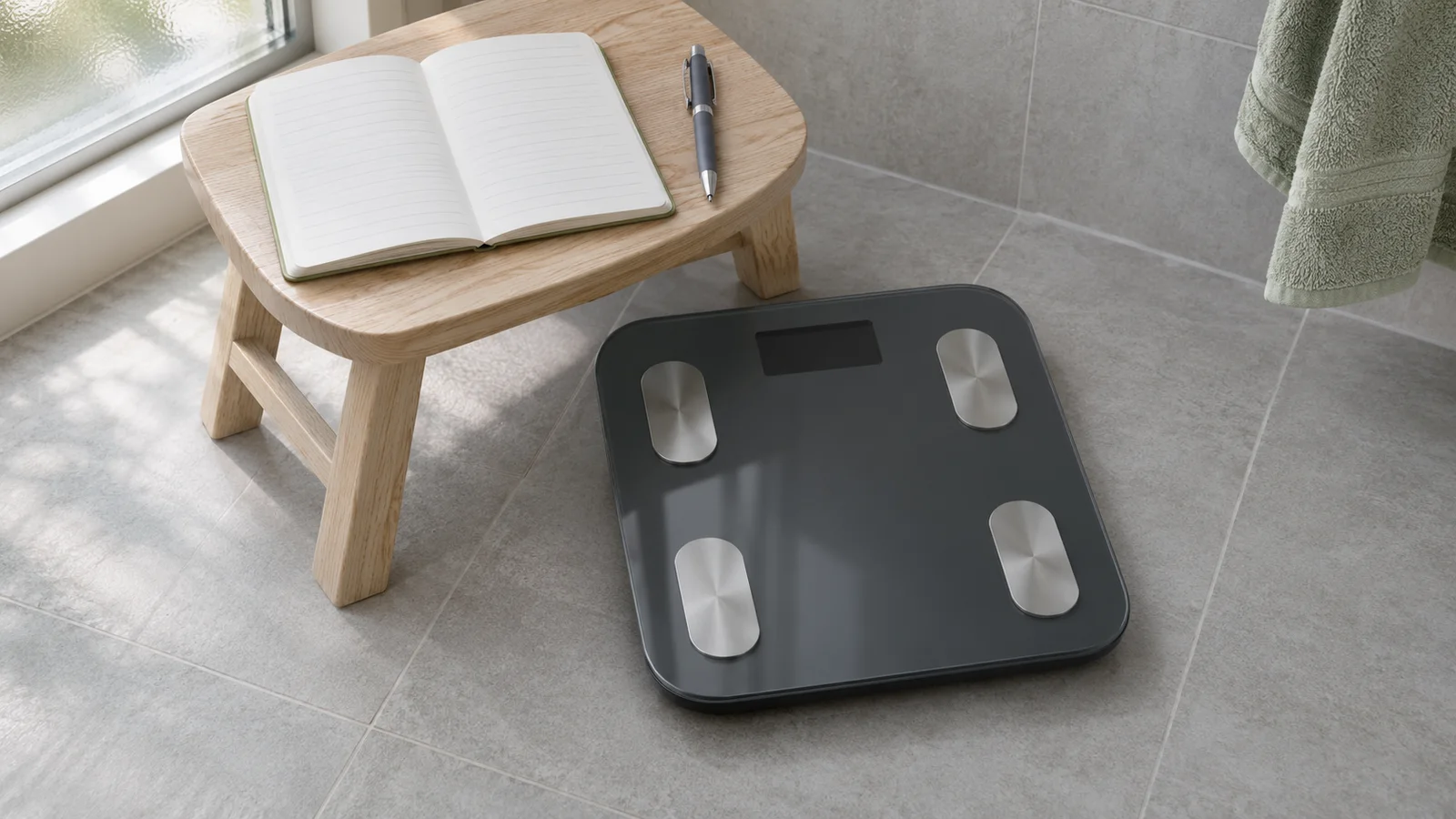
You step on the scale on Monday and get a higher reading than you saw on Friday, even though your routine felt much the same. Before changing what you eat or how you move, consider what the two readings can actually tell you. A scale measures your total weight at that moment. Meals, drinks, bowel movements and changes in how much water your body holds can move the number. A series of readings taken under similar conditions gives you a better basis for seeing which direction your weight is moving over time.
This guide is for people who choose to track weight as part of a general wellness routine. For a separate look at Christian Goodman's breathing-based wellness guide, see the Weight Loss Breeze program overview.
Make one reading comparable to the next
NHS England's weight management program suggests using the same scale in the same place, at a consistent time of day, on a firm and level floor. A bathroom tile floor usually provides a more stable surface than carpet. Mornings are often easier to compare because there has been less opportunity for meals, drinks and clothing changes to affect the reading. For example, you might step on after using the bathroom and before breakfast, with no shoes and with similar light clothing each time.
Check the unit on the display before writing the number down, especially if someone else uses the scale or if you have just changed the batteries. Let the reading settle before recording it. With an analogue scale, check that the pointer starts at zero. If you use a pharmacy scale or switch to a new device, make a note of the change and start comparing readings from that device separately. If you need support to stand, ask a clinic about an accessible scale and a way to get comparable measurements there.
Choose a schedule that fits the reason you are weighing
If the goal is to see your direction over time, a regular weekly check may be enough. Pick a day and a time you can usually keep, then write down the date, weight and unit. A missed check can stay blank. If a trip or a late shift changes your routine, wait until the next usual check or mark the changed conditions. The log still works if it has a few gaps, and giving yourself permission to miss an entry can make the routine easier to maintain.
Some people already take daily readings and prefer to summarize those numbers before looking at them. You can add the comparable readings for a calendar week and divide by the number of readings you have. Keep that count next to the average. Give a week with one or two entries less weight in your interpretation, especially if you measured after an unusual schedule change. If your health care team has given you a weighing plan for a medical condition, use their timing, reporting instructions and thresholds for action.
What a trend can look like on paper
Imagine someone records 184.2 pounds on Monday, 183.6 on Wednesday and 184.7 on Friday, under the same morning conditions. Those three readings average about 184.2 pounds. The following week, their readings on the same days are 183.9, 183.3 and 183.6, averaging 183.6 pounds. Friday's number in the first week rose from Wednesday's. The second weekly average still came out lower. Seeing a few more weeks would help show whether that direction continues or the readings are moving around the same range.
If you measure once a week, you can use a simpler version. List the dated readings in order and look at several weeks together. If the latest number surprises you, check the context column. A Monday evening measurement after work belongs in the record with that note, while comparisons are easier with another evening measurement or with your usual morning series. Write a short observation such as “mostly around the same range this month” or “gradually lower across four readings.” You can review that summary again at your next planned check.
If you plot the readings, put the dates on the horizontal axis and use the same weight unit for the whole graph. A chart that spans only a pound or two from bottom to top can make a small change look dramatic. Check the numbers behind the line and look across a longer stretch of dates before drawing a conclusion. If the app connects two entries several weeks apart, the connecting line just shows a gap between measurements. Your actual weight during the gap is unknown.
Write down context you can use later
Cleveland Clinic notes that short-term changes can come from fluid retention, digestion, hormonal changes and constipation, among other factors. If a reading comes after travel, a restaurant meal, a different time of day or a change in clothing, those circumstances can be useful to record. Keep the note factual. “Weighed after lunch” will help you understand the entry later. “The restaurant meal caused the change” goes beyond what the reading can establish.
One line per measurement is often enough. For example, write “Tuesday, 7 a.m., 83.4 kg, home scale,” and add a note only when something changed. Keep the unit the same through the log. An ongoing record can also be useful if a prescription changed or you developed a symptom around the time your weight shifted. Bring the medicine name, the date the dose changed and your dated readings to a visit so a clinician can consider them together. Discuss concerns about prescribed medicines with the clinician who manages them.
Read the scale alongside the rest of your routine
Your log can answer how your weight has moved. To understand what has changed in your life, look at what you have actually been doing and how it feels. For example, if you are working on regular movement, you might track how often you walked during your lunch break and how comfortable the route felt. If your focus is meal planning, you could record the number of evenings you had a meal ready at home. Those entries give you something concrete to talk about even when your weight stays in the same range.
NIDDK describes weight tracking as one part of a broader approach that includes eating patterns and physical activity you can sustain. If the scale starts to drive repeated checking, skipped meals or distress, a health professional can help you decide whether it makes sense to weigh at home. You can bring concerns about weighing to a visit even if you have no measurements to share. A clinician or dietitian can help identify other ways to follow what matters to your health.
When a change deserves medical attention
A substantial or persistent change that you cannot explain is worth discussing with a health professional. Tell them roughly how much changed, over what period, and whether you have noticed anything else such as swelling in the ankles, changes in appetite or trouble breathing. Rapid weight gain with new swelling or shortness of breath warrants prompt medical advice. Severe breathing difficulty calls for emergency care.
With heart failure, a weight log may serve a different purpose. The American Heart Association advises people with heart failure to ask their care team what amount of weight gain to report and to report new or worsening symptoms right away. In that situation, a sudden change can matter on its own, and averaging it into a weekly figure can delay a needed call. Keep your care team's instructions where you record your measurements, so you know whom to contact and when to act if your readings or symptoms change.
Review your entries at the end of the month
Look back at the dates and conditions first. Did you get several readings you can reasonably compare? Did they stay in a band or gradually move in one direction? Did any change coincide with symptoms or a new medicine? If you are taking the log to an appointment, a short summary such as “four morning readings on the same scale across the last month” gives the clinician context before you show the numbers. For readers interested in the separate wellness resource, the Weight Loss Breeze guide details describe its contents and format.
Sources and further reading
- NHS England, How to Record Your Weight
- East Lancashire Hospitals NHS Trust, Body Measuring Techniques
- Cleveland Clinic, Why Does My Weight Fluctuate So Much?
- NIDDK, Eating and Physical Activity to Lose or Maintain Weight
- American Heart Association, Physical Changes to Report for Heart Failure
- MedlinePlus, Unintentional Weight Gain
- NHS, Shortness of Breath
- NHS, Symptoms of Anorexia Nervosa
RECOMMENDED READING
A practical guide for readers interested in weight lossA guide to weight loss

Weight Loss Breeze
A digital guide by Christian Goodman. Review the program overview and contents before deciding whether it is relevant to you.
- Topic: weight loss
- Author: Christian Goodman
- Format: digital guide
 Secure checkout through ClickBank
This page contains affiliate links. We may earn a commission if you purchase through them, at no extra cost to you.