Walking for Weight Management: Use the Talk Test to Find Your Pace
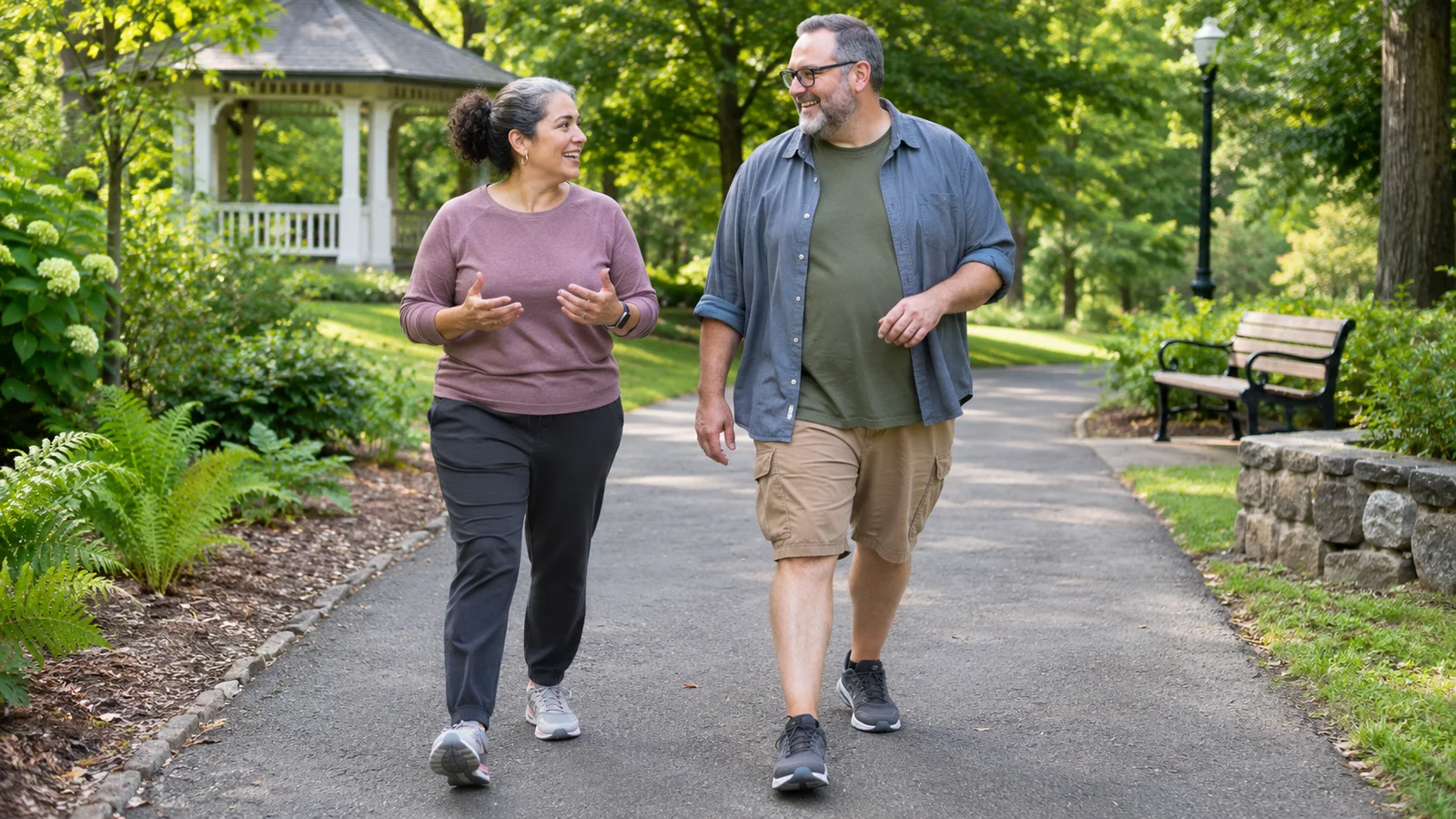
A walk you can repeat most weeks is a useful starting point for weight management. You can gauge how hard you are working by noticing your breathing and whether you can still hold a conversation. That gives you a practical way to choose a pace when a watch, step target, or friend’s walking speed tells you very little about how the effort feels to you. You can then plan around the time, routes, and energy you actually have.
Christian Goodman’s site includes a product overview for Weight Loss Breeze for readers browsing its weight management resources. The walking advice below comes from public health guidance and research on physical activity.
Use the talk test to find a moderate pace
The Centers for Disease Control and Prevention describes moderate-intensity aerobic activity as a level of effort at which you can talk but would find it hard to sing. During vigorous activity, you may be able to say only a few words before pausing for air. This is called the talk test. In a park or on a treadmill, try saying a complete sentence at your normal speaking volume and notice how comfortably you finish it.
Think of the result as feedback about your effort on that particular day. One walker might reach a moderate effort on level ground while another needs a quicker pace. A hill, a hot afternoon, or an unfamiliar route can make the same speed feel harder. If you walk with a friend, it can help to agree on a pace at which you can both converse. On a steeper stretch, slowing down may let you maintain a similar effort.
An easy walk can be useful when you are getting started or have limited energy. It can help you learn how a route feels, how much time a loop takes, and whether your feet and joints are comfortable. When the route becomes familiar, you can use the talk test during a short stretch to see how a slightly quicker pace feels. The test estimates exercise intensity and cannot establish whether exercise is medically appropriate for you.
Pick a starting point you can repeat
Look at a typical week before choosing a target. If you have been mostly inactive, NIDDK suggests starting slowly. A short walk after a regular activity such as lunch, a morning bus ride, or the end of a shift can be easier to remember than fitting a long outing into an uncertain evening. Choose a route with a clear turnaround point so you can decide how long to be out without constantly looking at your phone.
For example, a person might begin with a short loop on three workdays that already include a lunch break. After that feels manageable, they might add one day or extend one loop. Changing one feature at a time makes it easier to identify what affected comfort, fatigue, or the ability to keep the routine. A person who already walks farther on the weekend could choose to create a second opportunity midweek.
Give yourself an indoor option and a short option. A mall, a public recreation center, or a familiar covered corridor may be available when sidewalks are slippery or the heat is uncomfortable. If a usual walk gets squeezed by a late meeting, a shorter outing can preserve the habit and leave time for other commitments. The goal of a backup plan is to keep walking possible when the original plan stops fitting the day.
Make the arrangement specific enough that you can tell whether it worked. If you plan to walk after lunch, for example, decide which door you will leave from and which landmark will be your turn. When a walk keeps getting missed, look at the reason. An unsafe crossing might call for a different loop, while a short break might work better with two brief outings on separate days. The route and timing are parts of the plan you can adjust.
Count minutes alongside steps
US guidelines recommend that adults aim for at least 150 minutes of moderate-intensity aerobic activity per week, or the equivalent from vigorous activity or a combination. They also recommend muscle-strengthening activity on at least two days a week. These are public health targets. People can accumulate aerobic activity in short periods, and some activity offers health benefits even when the weekly total is below the target.
If you are curious how your walking adds up, record the time you spend at a moderate effort on a few walks. An outing might include an easy start, a stretch where talking takes some effort, and a slower return. The time spent on the middle stretch helps you work out your weekly moderate-intensity minutes. You can keep a separate total for all walking if seeing the easier trips helps you understand your daily activity.
A step count is a quick measure of how much you moved, especially if you compare your own days using the same device. It tells you less about effort than your breathing during a walk. A route with fewer steps and a long uphill section may feel more demanding than a route with more steps on flat ground. Pick the measure that matches the question you want to answer, whether it is how often you walked, how long you were out, or how much time you spent at a moderate effort.
Set expectations for weight and other changes
A 2024 review in JAMA Network Open combined 116 randomized trials involving adults with overweight or obesity. Across supervised aerobic exercise programs, participants generally had modest reductions in body weight, waist circumference, and body fat, with larger average changes at higher weekly durations. The programs lasted for weeks or longer and included a range of aerobic activities. Their averages cannot predict the change one person will see from an unsupervised walking routine.
The CDC includes activity as one part of weight management alongside eating patterns. How much activity is needed to maintain a particular weight varies from person to person. If you track weight, look at how it changes over time instead of using a single reading to judge a week’s walks. Fitness can change in ways the scale does not show. You might notice that a familiar route feels easier, you pause less often, or you have more energy for a daily errand.
A walking note can be very simple. Write the date, approximate minutes, and one detail about how you felt. “Twelve minutes, steady pace, still talking comfortably” gives you a point of comparison for next week. If a walk leaves you unusually tired or sore, record how long that feeling lasted. A short record can help you decide which routes to repeat and gives you something specific to bring up if you ask a healthcare professional about increasing activity.
Plan for comfort and know when to stop
A route with a smooth surface, somewhere to rest, and a clear way home makes it easier to adjust the walk if you need to. If joint discomfort, balance concerns, or another condition makes outdoor walking difficult, ask a healthcare professional or physical therapist about activity that suits your abilities. NIDDK describes options such as water exercise and seated activity, which can help people find ways to move that fit their circumstances.
When conditions make a familiar route feel different, use the first few minutes to reassess. Uneven pavement may require a slower pace, and a humid day may make it harder to keep talking. If you want to compare efforts across weeks, choose a familiar stretch of level path and check how it feels under similar conditions. Allow more time for the return on an unfamiliar route so you can ease up without rushing.
Stop if you develop concerning symptoms during activity. Seek emergency help for chest pressure, severe shortness of breath, or fainting. Repeated pain in the feet, knees, or hips also merits a conversation with a healthcare professional, especially if it changes the way you walk or continues afterward. A clinician can help you work out which activities and which increases in effort are appropriate.
Choose one place to walk and one time that already fits your week. Use the talk test to get familiar with the effort, then check what made the outing easy or hard to repeat. Readers who want to browse the companion title can see the book details and format for Weight Loss Breeze. For your walking routine, a useful first milestone is knowing when and where your next walk can happen.
Sources and further reading
- Centers for Disease Control and Prevention, How to Measure Physical Activity Intensity
- Centers for Disease Control and Prevention, Adult Activity Overview
- Centers for Disease Control and Prevention, Physical Activity and Your Weight and Health
- National Institute of Diabetes and Digestive and Kidney Diseases, Staying Active at Any Size
- Jayedi et al., Aerobic Exercise and Weight Loss in Adults, JAMA Network Open
RECOMMENDED READING
A practical guide for readers interested in weight lossA guide to weight loss

Weight Loss Breeze
A digital guide by Christian Goodman. Review the program overview and contents before deciding whether it is relevant to you.
- Topic: weight loss
- Author: Christian Goodman
- Format: digital guide
 Secure checkout through ClickBank
This page contains affiliate links. We may earn a commission if you purchase through them, at no extra cost to you.