Serving Sizes on Food Labels: A Practical Guide for Weight Management
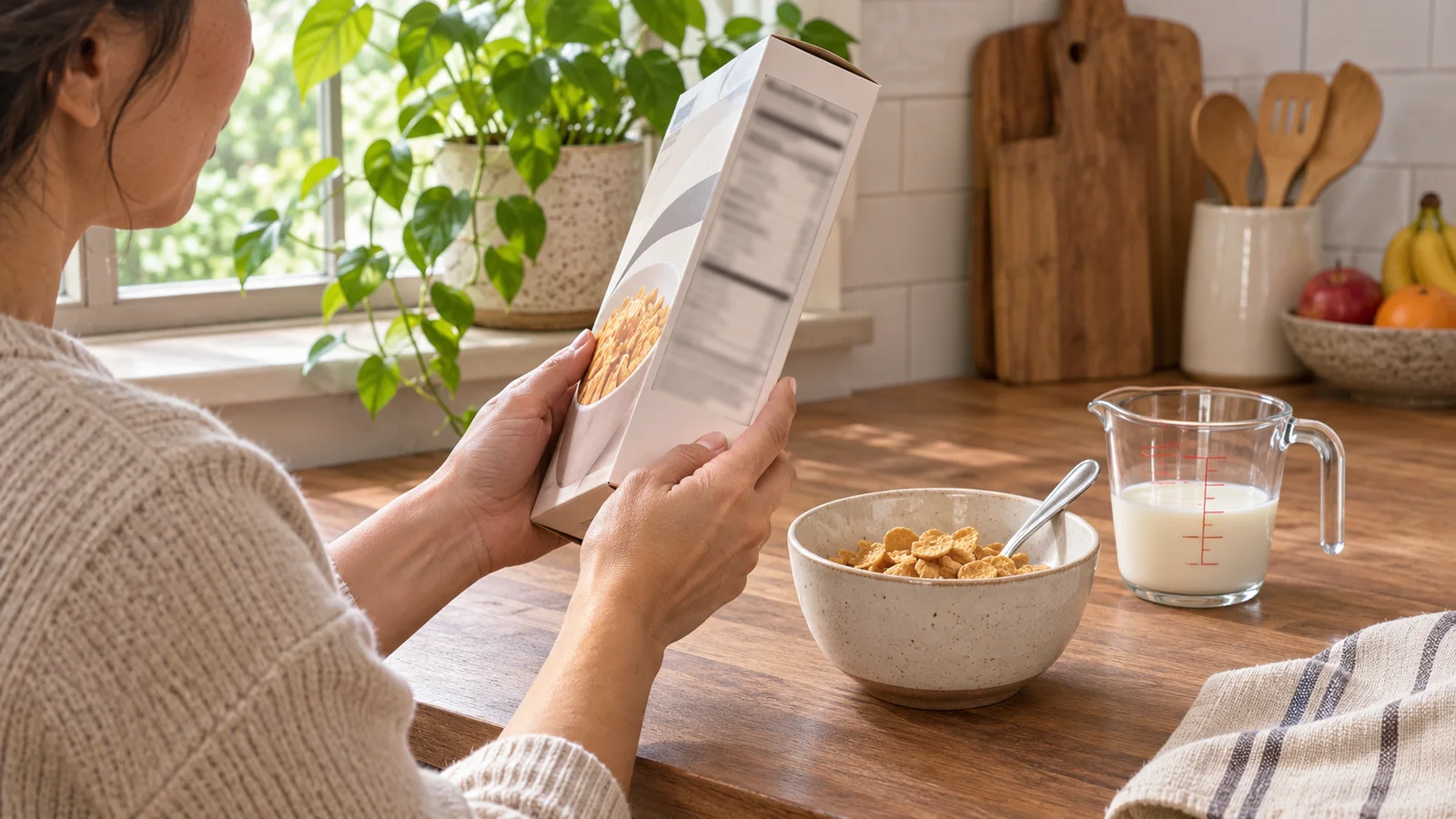
A cereal box may list 160 calories at the top of its Nutrition Facts panel, even though the bowl you pour is larger than the amount listed. To use a food label for weight management, first check what quantity the numbers describe. Then compare that quantity with what you actually eat or drink. You can use this skill to compare products, understand what is in a meal, or keep a more accurate food record when your care team recommends one.
If you are looking for information about the separate digital wellness guide sold on this site, see the product description for Christian Goodman’s Weight Loss Breeze. The examples here use the US Nutrition Facts format and guidance from the Food and Drug Administration and the National Institute of Diabetes and Digestive and Kidney Diseases.
Start with the serving size and servings per container
On most US labels, both numbers sit near the top. The serving size tells you which quantity the nutrition numbers refer to. It often appears as a household measure such as a cup or a number of pieces, followed by a weight in grams. Servings per container tells you how many of those amounts the package holds. A package can look like one snack and still contain more than one labeled serving.
The FDA bases serving sizes on amounts people typically consume. Your portion is the amount you actually put on your plate, in your cup, or in a bag for later. The two amounts may match, and they may differ from day to day. A labeled serving gives you a reference for doing the math. It does not set an individual target for a meal or tell you how much you need to eat.
Check both the household measure and the weight when comparing foods. One cereal may list a serving as a cup while another lists it as three quarters of a cup. Products can also have different weights for the same volume. For a comparison by the amount you usually eat, use the unit that matches how you serve it. For a comparison by equal weight, use the grams on each package.
Match the numbers to the portion you eat
Suppose a cereal lists 160 calories and 4 grams of fiber per three quarters of a cup. A bowl containing one and a half cups holds two labeled servings. The cereal in that bowl provides about 320 calories and 8 grams of fiber before milk, yogurt, or toppings are added. Both numbers change when the portion changes. The same calculation works for sodium, added sugars, and other nutrients listed per serving.
For amounts that fall between servings, the math works the same way. If a package lists 120 calories per 30 grams and you have 45 grams, you have one and a half servings. Multiply 120 by 1.5 to get about 180 calories. If a food record accepts servings, entering 1.5 servings can save you a separate calculation. Keep the label or a photo handy if you expect to use the same item again.
Precision has limits. Label values can be rounded, and a scoop or cup at home may be more or less full each time. If a familiar portion is hard to estimate, measuring it once can show you roughly what it looks like in your usual bowl. That is often enough for a shopping comparison or to understand a source of confusion in a food record.
If a label gives only a household measure that feels unfamiliar, use the gram value when the product is easy to weigh. For instance, irregular crackers may not fit a measuring cup the same way every time. A matched quantity helps when you are comparing brands. If you are dividing the package among several people, use the portion you personally eat for your own record. The label for the original package still gives you the starting point.
Read the right column on a multi-serving package
Some US packages have two columns, with figures for one serving and for the whole container. If a drink lists 100 calories per serving and 250 per bottle, the right number depends on how much of the bottle you drink. Use the whole-container column if you finish it. If you pour about half the bottle, half the whole-container value is a reasonable estimate. Multiplying the whole-container value by the number of servings would count the same drink more than once.
Also look for wording such as “as packaged” or “as prepared.” A boxed mix can show values for the dry product and a separate column for a preparation made according to the directions. If you use different ingredients, the prepared figures may differ. When you compare mixes at the store, first compare the same kind of column. Later you can consider what you usually add at home.
Compare foods using the same amount and the nutrients you care about
Imagine that one trail mix lists 140 calories for 28 grams and another lists 165 calories for 35 grams. The second total looks higher at first. If you compare both at 28 grams, the second works out to about 132 calories. In a shop, a small difference like this may matter less than the portion you actually eat, the price, or another nutrient that is important to you. The calculation helps you see what accounts for the difference before you decide.
Percent Daily Value gives another way to read the label. It shows how much a serving contributes to the general daily reference for a nutrient. The FDA describes 5% or less as low and 20% or more as high. Those shortcuts apply to the stated serving. They can help you compare fiber, added sugars, saturated fat, or sodium when the amounts being compared are similar. The 2,000-calorie figure in the label footnote is used for general nutrition advice. Your needs can vary with age, activity, health, and other factors.
Look at what the food contributes to the meal you plan to eat. Two packages can have a similar calorie count and different amounts of fiber, added sugars, or sodium. A cereal with a smaller serving size can also appear to provide less of each nutrient across the board. Match the portions first and compare the details you care about. This helps prevent a single number on the front of the package from deciding for you.
Consider what happens when you combine several foods. If you are looking at a bowl of cereal, the box describes the cereal by itself. Milk, fruit, or yogurt have their own quantities and nutrients. A change in what you add can alter how satisfying the meal feels and what it contributes. For a fair comparison between two cereals, compare the cereal on its own first. For a record of what you ate, include the other foods if your plan calls for that level of detail.
Use the information for one practical decision
Pick a food you buy regularly and think about the decision you want to make. If you usually eat crackers straight from a bag, you might want to see how your usual amount relates to one serving. If you are choosing between two soups, you may care more about comparing calories and sodium for a bowl that you will finish. A question like that gives you a reason to check the panel and tells you when the information is sufficient.
If a clinician or dietitian has asked you to keep a food record, ask how much detail will help. Sometimes a brief sample of usual meals is enough to show patterns. If you log a packaged item, verify the listed grams or volume and whether the entry is per serving or per container. For meals you cook or buy without a label, explain that an amount is an estimate. The record is most informative when it reflects an ordinary week.
A record can also show when a comparison is irrelevant. If a package contains several servings but you spread them across several days, the whole-package total can be a poor description of any one day. Save the portion information you need and bring questions about the pattern to your dietitian, especially if you have been asked to pay attention to more than one nutrient.
Weight management can involve the overall eating pattern, activity, sleep, medicines, and other factors. Reading a label helps with a narrow part of that work. If tracking numbers becomes distressing or makes it difficult to eat adequately, raise that with a healthcare professional. They can help you find an approach that suits your health and circumstances.
At your next shop or meal, start with the listed serving, identify the amount you actually want to compare, and read the corresponding numbers. For details on the separate commercial program sold here, see the guide overview and purchase information for Weight Loss Breeze.
Sources and further reading
- US Food and Drug Administration, Serving Size on the Nutrition Facts Label
- US Food and Drug Administration, Understanding and Using the Nutrition Facts Label
- National Institute of Diabetes and Digestive and Kidney Diseases, Food Portions
- Centers for Disease Control and Prevention, Steps for Losing Weight
RECOMMENDED READING
A practical guide for readers interested in weight lossA guide to weight loss

Weight Loss Breeze
A digital guide by Christian Goodman. Review the program overview and contents before deciding whether it is relevant to you.
- Topic: weight loss
- Author: Christian Goodman
- Format: digital guide
 Secure checkout through ClickBank
This page contains affiliate links. We may earn a commission if you purchase through them, at no extra cost to you.