Sleep Actigraphy: What to Expect When You Wear a Wrist Monitor
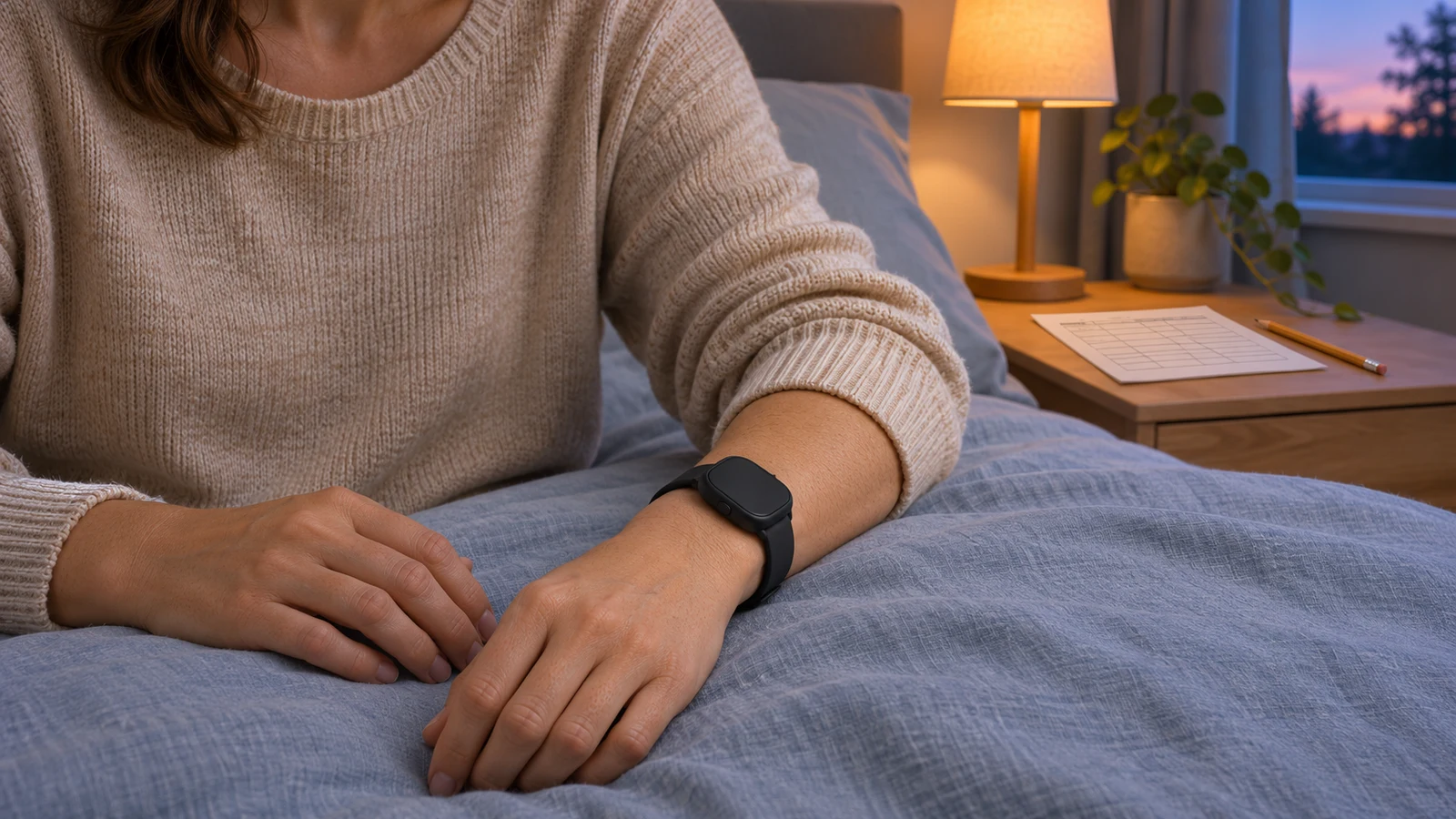
A sleep clinic may ask you to wear a watch-like monitor at home for several days or weeks. The test is called actigraphy. It records movement so the clinic can estimate when you sleep and when you are awake. Looking at several days can help the team see whether your sleep starts and ends at similar times or changes from one day to the next.
What to do when the clinic lends you a monitor
Ask which wrist to wear it on, when the recording should start and end, and whether the device can get wet. Some monitors have an event button. Your clinic may ask you to press it at bedtime, when you get up, or when you take the monitor off. Follow the instructions for the device you are given. If you miss a button press or remove the monitor, write down roughly when it happened so the clinic can make sense of the recording.
Keep your usual routine and record unusual days
Follow your usual schedule unless your clinic tells you otherwise. If you are asked to keep a diary, note when you got into bed, when you got up, and any naps. Add a short note for things that changed your routine, such as working a night shift, traveling, or staying up to look after someone. A few words can explain a change in the pattern.
Why your notes still count
A movement sensor can count a stretch of quiet wakefulness as sleep. If you remember lying still and awake, put that in the diary. Your clinician can read your notes alongside the monitor data and ask about any differences. Actigraphy is optional in an insomnia evaluation. If the clinic needs to investigate breathing during sleep, ask whether a separate sleep apnea test is appropriate. An actigraphy recording by itself cannot diagnose sleep apnea.