An Oral Appliance for Sleep Apnea: What to Ask About Fit and Follow-Up
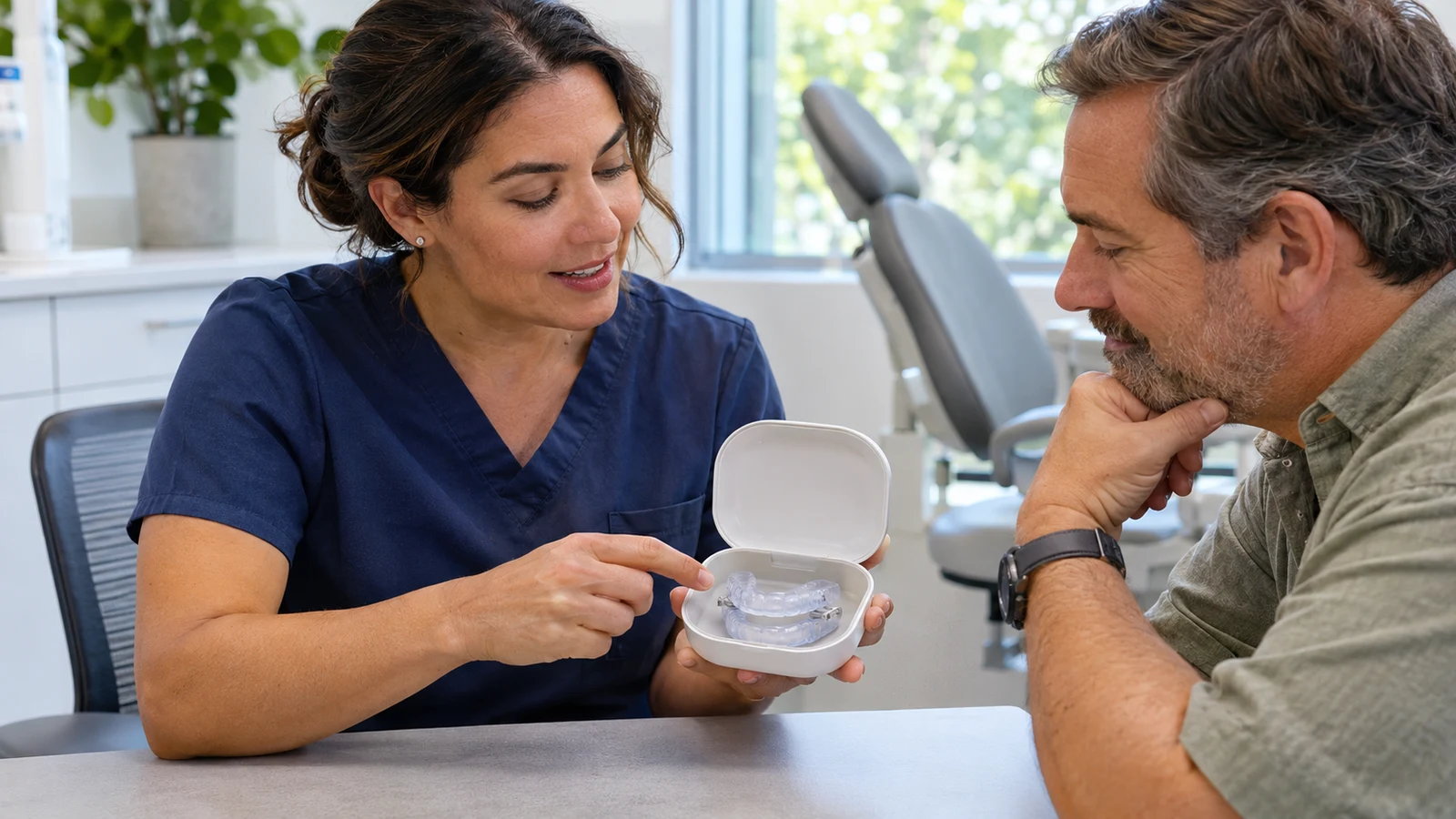
If you have obstructive sleep apnea and find CPAP difficult to use, your sleep clinician may discuss a custom oral appliance. One common design holds the lower jaw forward during sleep to help keep the airway open. A fitting and a follow-up sleep test can help the care team check both comfort and whether the appliance is working.
Start with your sleep clinician
Bring your sleep study results if you have them. Explain what has made CPAP difficult, such as mask leaks or trouble sleeping with it. Ask whether an oral appliance is an option in your situation and what to use while it is being fitted. Speak with your sleep clinician before changing the treatment you already use.
Ask the dentist about fit and bite changes
A dentist trained in dental sleep medicine can check your teeth and jaw and fit a custom appliance that can be adjusted. Mention any jaw joint pain, loose teeth, or dental work you expect to have. Ask who will make the adjustments and what to do if you notice sore teeth, jaw discomfort, or a change in the way your teeth meet after you remove it.
Make a plan to check the result
Tell your care team whether your snoring or daytime sleepiness changes, and ask when they want to repeat sleep testing with the appliance in place. Feeling more rested or hearing that you snore less is useful feedback. A follow-up sleep test checks whether breathing interruptions are controlled. Ask which clinician will explain the result and who will check your teeth, bite, and appliance over time.