A Negative Home Sleep Apnea Test: What to Ask Next
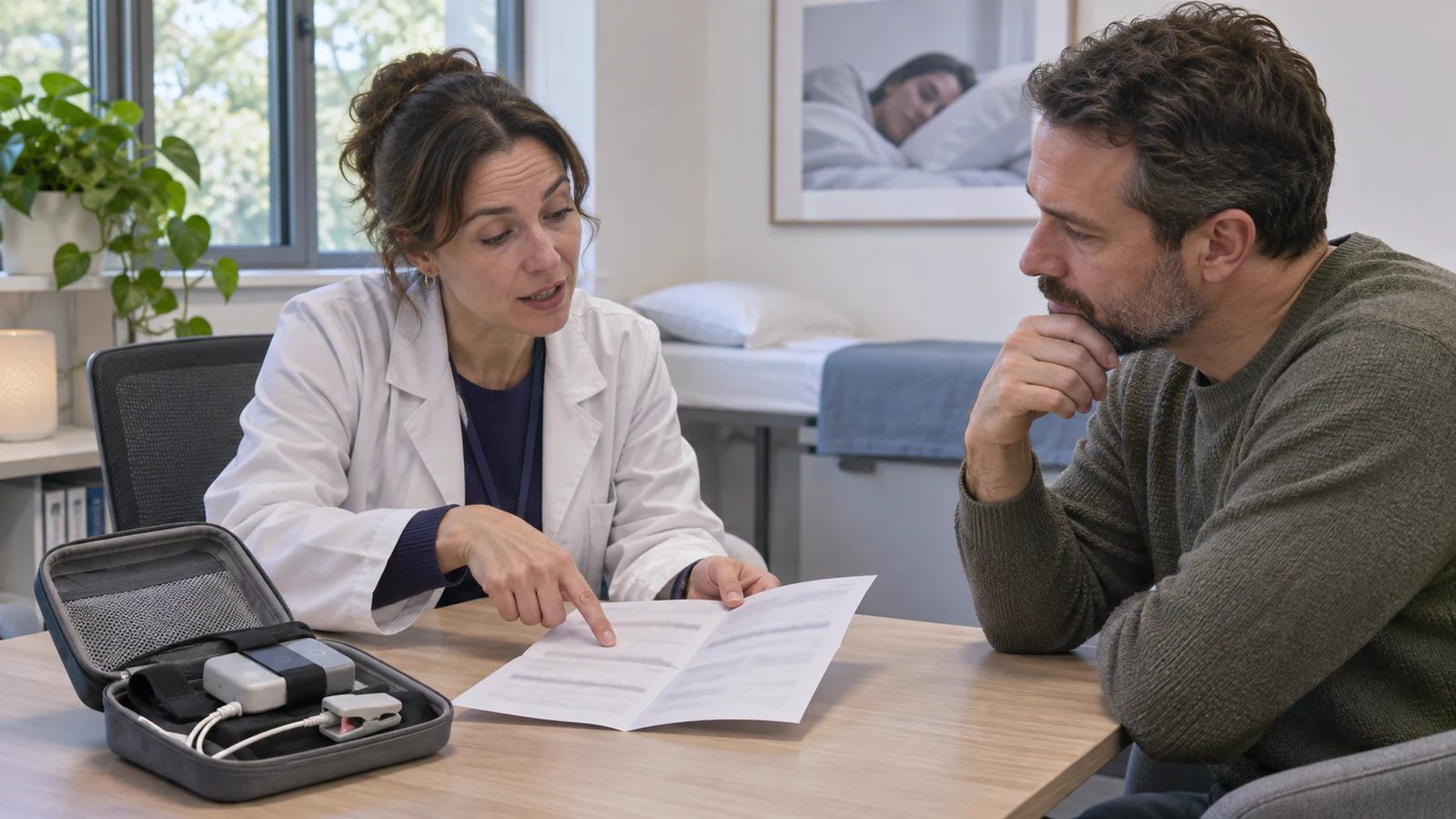
A home sleep apnea test can record breathing and blood oxygen overnight. If the report says the test was negative, but you still wake up gasping or struggle to stay alert during the day, ask your sleep clinician to review the result with you. A negative report can mean the device recorded too few breathing events to meet the test criteria. It can also miss events that a more complete sleep study would detect.
Ask whether the recording was usable
Ask whether the device recorded enough usable data and whether any sensor stopped working. Tell the clinic if a sensor came off, you spent much of the night awake, or the night was different from your usual sleep. Many home devices count breathing events over the recording time because they cannot tell exactly when you were asleep. If you were awake for a long stretch, that can make the rate of events appear lower.
Describe the symptoms that are still happening
Tell your clinician how often you wake up gasping, feel sleepy during the day, or hear from someone that you pause breathing at night. A specific example, such as feeling sleepy during a morning meeting after a full night in bed, can help explain what prompted the test and what has continued since.
Ask if an overnight study in a sleep lab is the next step
The American Academy of Sleep Medicine recommends an in-lab sleep study when a home sleep apnea test is negative, inconclusive, or technically inadequate. An in-lab study, called polysomnography, records additional signals such as brain activity that help the team distinguish sleep from wakefulness. Ask who will arrange any further testing and when you should follow up.