After a Broken Bone: What a Fracture Liaison Service Does
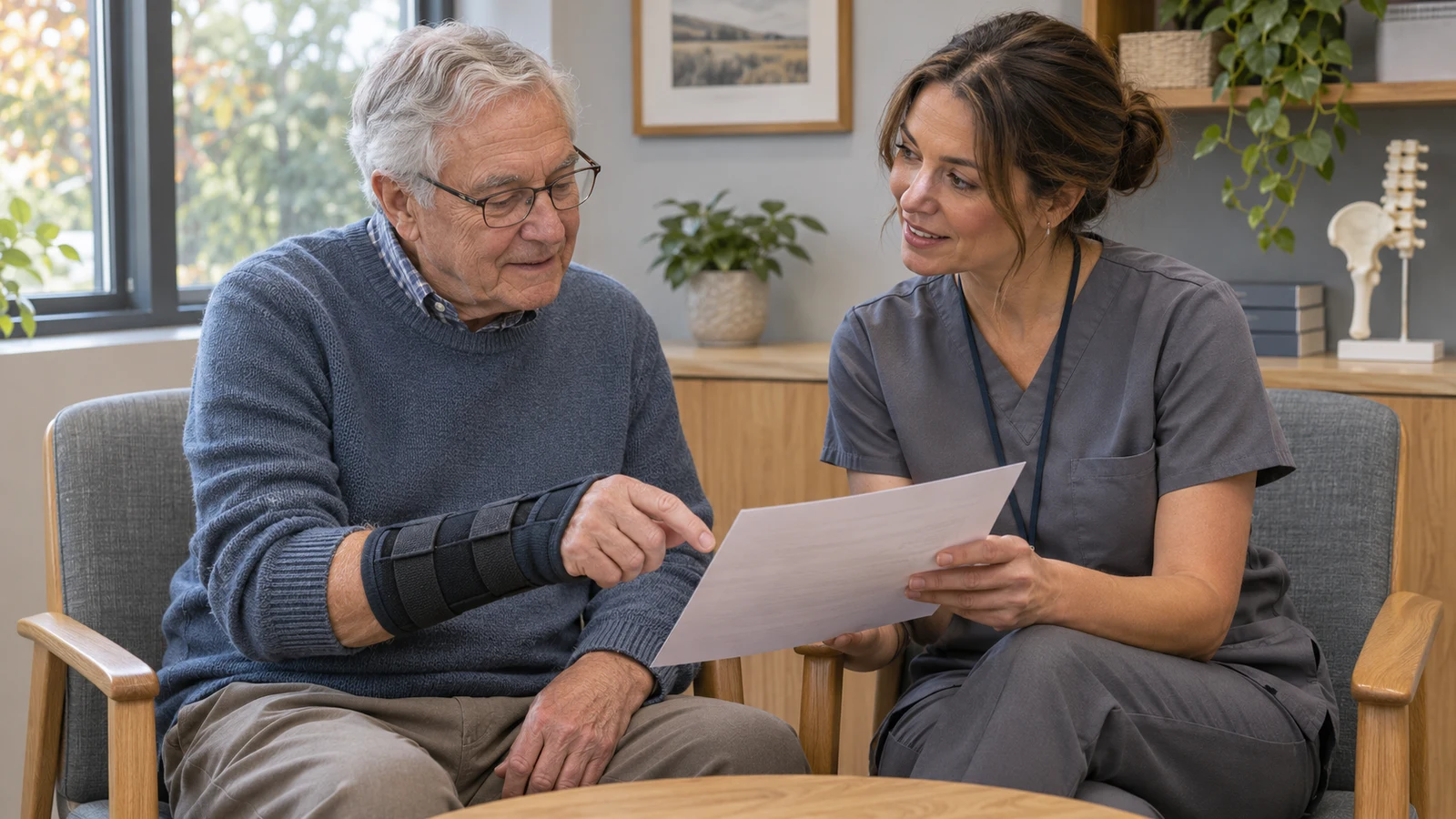
After a bone breaks in a fall from standing height or after another low-impact injury, a care team may want to check your chances of breaking another bone. Some hospitals organize this assessment through a fracture liaison service, or FLS. The team focuses on bone health and can help coordinate care while the fracture heals.
Describe the injury and what has changed since
Tell the team how the injury happened, including what you were doing and how far you fell. Mention previous fractures, falls, or near-falls. If you have a medicine list, a discharge summary, or a past bone density result, have them available. Explain what has become harder since the break, such as getting around the house or preparing a meal.
Ask what the team wants to check
The assessment may include a review of fracture risk and falls, a bone density scan called DXA, or blood tests to look for conditions that can affect bone health. Which checks are useful depends on the injury and your health history. Ask which tests are being arranged and how the results may affect your care.
Leave with a clear contact and next step
Ask who will share the results, who will discuss any prevention plan with you, and when to get in touch if you have heard nothing. If your hospital does not have a fracture liaison service, ask the team treating the break or your primary care clinician who can assess your bone health and fall risk.
References
This article provides general health information. Your care team can advise on the assessment and follow-up appropriate to your fracture.