Blood Pressure in Both Arms: Which Arm Should You Use?
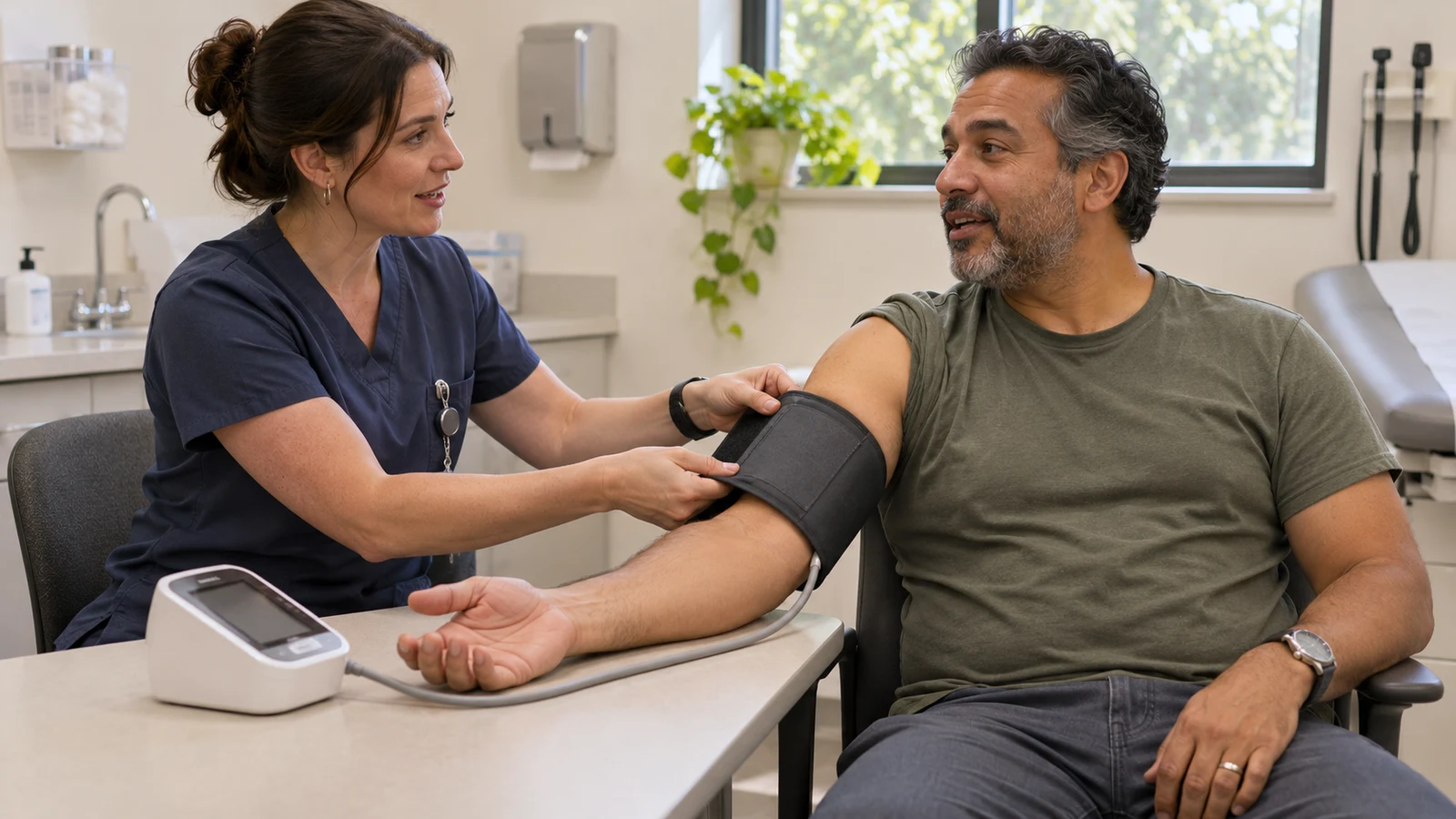
At an initial blood pressure check, the clinic may measure one arm and then the other. If one arm consistently reads higher, using that arm for future checks helps you and your care team compare readings taken in the same way.
Let the clinic compare the readings
Tell the person measuring your blood pressure if a care team has asked you to avoid a cuff on either arm. If the readings differ, the clinician may repeat both measurements. UK NICE guidance recommends repeating them when the difference exceeds 15 mmHg and using the higher-reading arm for future checks if that difference persists. The clinician can decide what a repeated difference means in the context of your other readings and medical history.
Write the arm on your home log
Ask which arm to use before you start a home log. Label the log “left arm” or “right arm,” and use that arm consistently unless your care team gives you different instructions. If you discover that earlier readings came from a different arm, keep those readings and label them if you remember which arm you used. That gives the clinician more context when comparing your records.
Use the same position each time
For routine home measurements, the American Heart Association recommends sitting quietly before the reading, supporting the arm at heart level, and placing a properly sized cuff on bare skin. Bring your monitor and log to an appointment if you are unsure how your device fits or how your readings compare with the clinic’s. Ask how often to measure and when to contact the clinic about a reading.
References
This article provides general health education. Your care team can interpret your readings and help you plan home monitoring.