Morning Bloating After CPAP: What to Tell Your Sleep Clinic
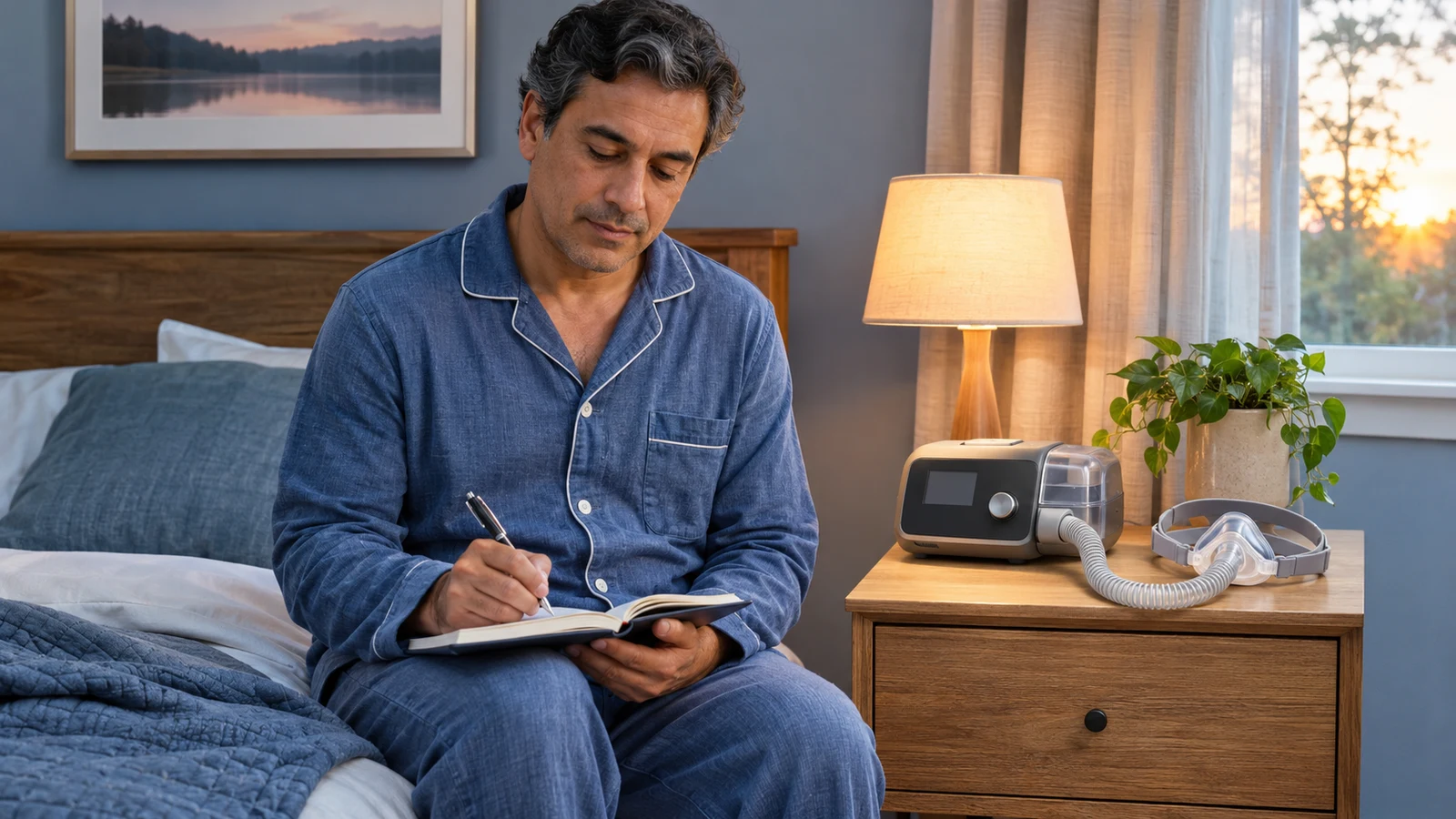
If you wake up bloated or burping after a night with continuous positive airway pressure (CPAP), tell your sleep clinic when it began and how long it lasts. The timing can help your clinician decide whether the symptoms might be related to your device or need a separate evaluation.
What swallowed air can feel like
CPAP delivers pressurized air to help keep your airway open during sleep. Some of that air can enter the digestive tract. This is called aerophagia, and it can come with belching, passing gas, or abdominal discomfort. A full feeling on waking can have other causes too, so note whether it also happens on days or evenings when you have not used your machine.
Give the clinic a short timeline
Mention whether it started with a new machine, a new mask, or a pressure change your clinic made. Describe what you feel, when it starts, how long it lasts, and whether it wakes you or makes you remove the mask. If you already have a therapy report, offer to share it along with the machine model and mask type. These details help the clinic review symptoms together with your treatment data.
Ask what to do before your next night
The U.S. National Heart, Lung, and Blood Institute advises stopping positive airway pressure therapy and contacting your healthcare provider if you experience stomach discomfort or bloating. Ask the clinic promptly what to do before the next use, and leave pressure changes to your care team. In one short crossover trial, participants who reported swallowing air with CPAP had less bloating and belching with automatically adjusting pressure, although they did not use the device for longer each night. Your care team can assess whether a change is appropriate for you.
References
This article provides general health education. A clinician can evaluate your symptoms and advise you on your prescribed therapy.