Reading a Bone Density Report: What T-Scores and Z-Scores Mean
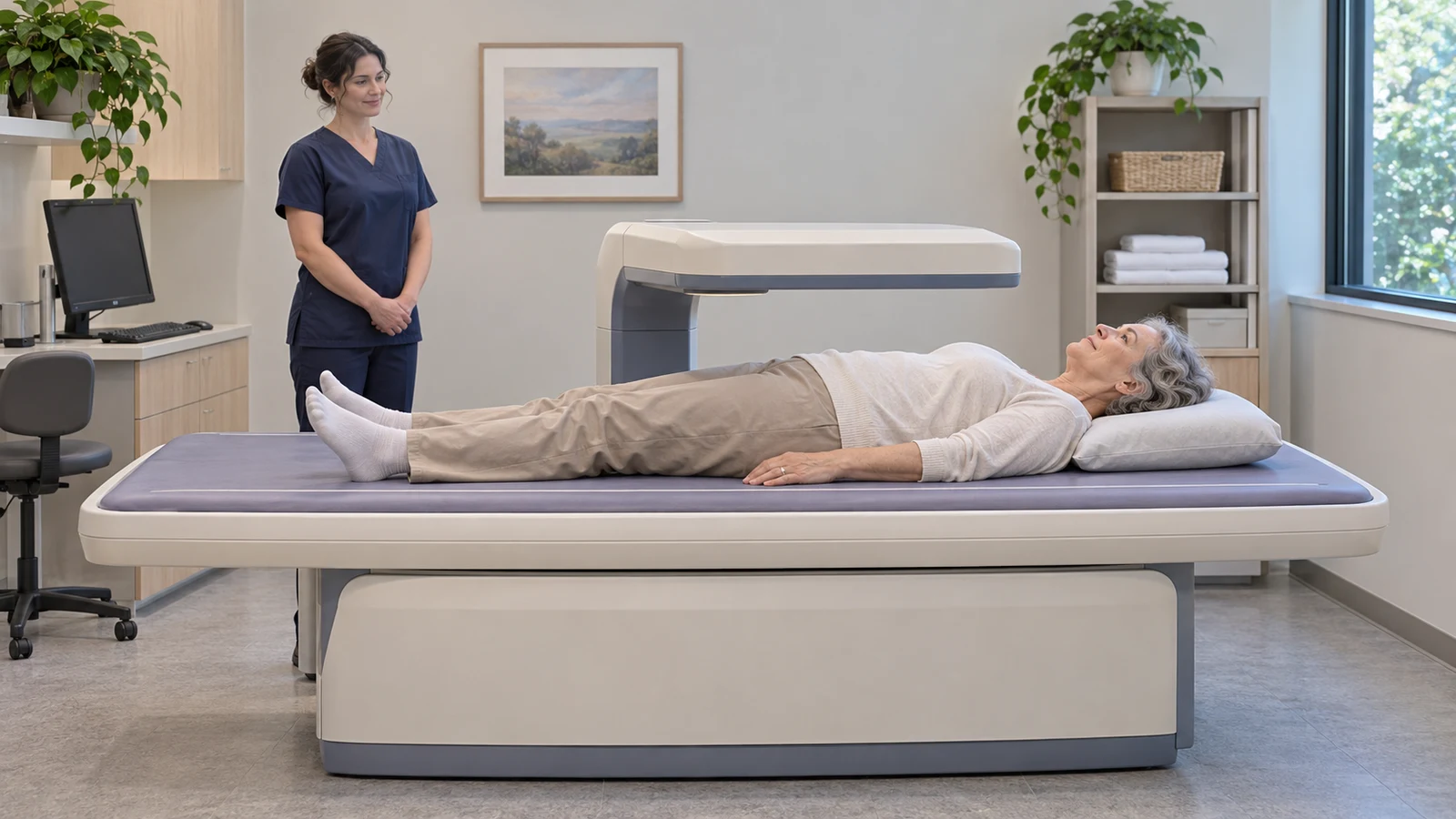
A bone density report can list several numbers because a DXA scan measures different sites, usually including the hip and lower spine. Start by locating the site listed next to each score, then ask which score your clinician used to interpret your scan.
Find out which comparison applies to you
A T-score compares bone density with a young-adult reference. Clinicians typically use it for postmenopausal women and men age 50 or older. In these groups, a T-score of −2.5 or lower at an appropriate site can meet the bone-density criterion for osteoporosis. A Z-score compares bone density with an age-matched reference and is generally preferred before menopause and in men younger than 50. Ask what the result means in light of your age and medical history.
Keep hip and spine results separate
Reports may list the total hip, femoral neck, and lumbar spine. The femoral neck is the part of the upper thigh bone just below the ball of the hip joint. Each number describes a particular measurement site. If the values differ substantially, ask whether anything affected the reading and which sites were suitable for interpretation. Your clinician also considers factors such as past fractures and medications when assessing your overall risk.
Bring the previous report if you have one
Keep a copy of the full report. If a follow-up scan was done on a different machine or at a different facility, mention that before comparing results. Small differences can result from positioning or measurement variation. Ask whether the change is large enough to be meaningful, how it affects your follow-up plan, and when a repeat scan would be useful.
References
This article provides general health education. Your clinician can interpret your scan and explain your fracture risk and follow-up options.