Wearing a 24-Hour Blood Pressure Monitor: What to Expect
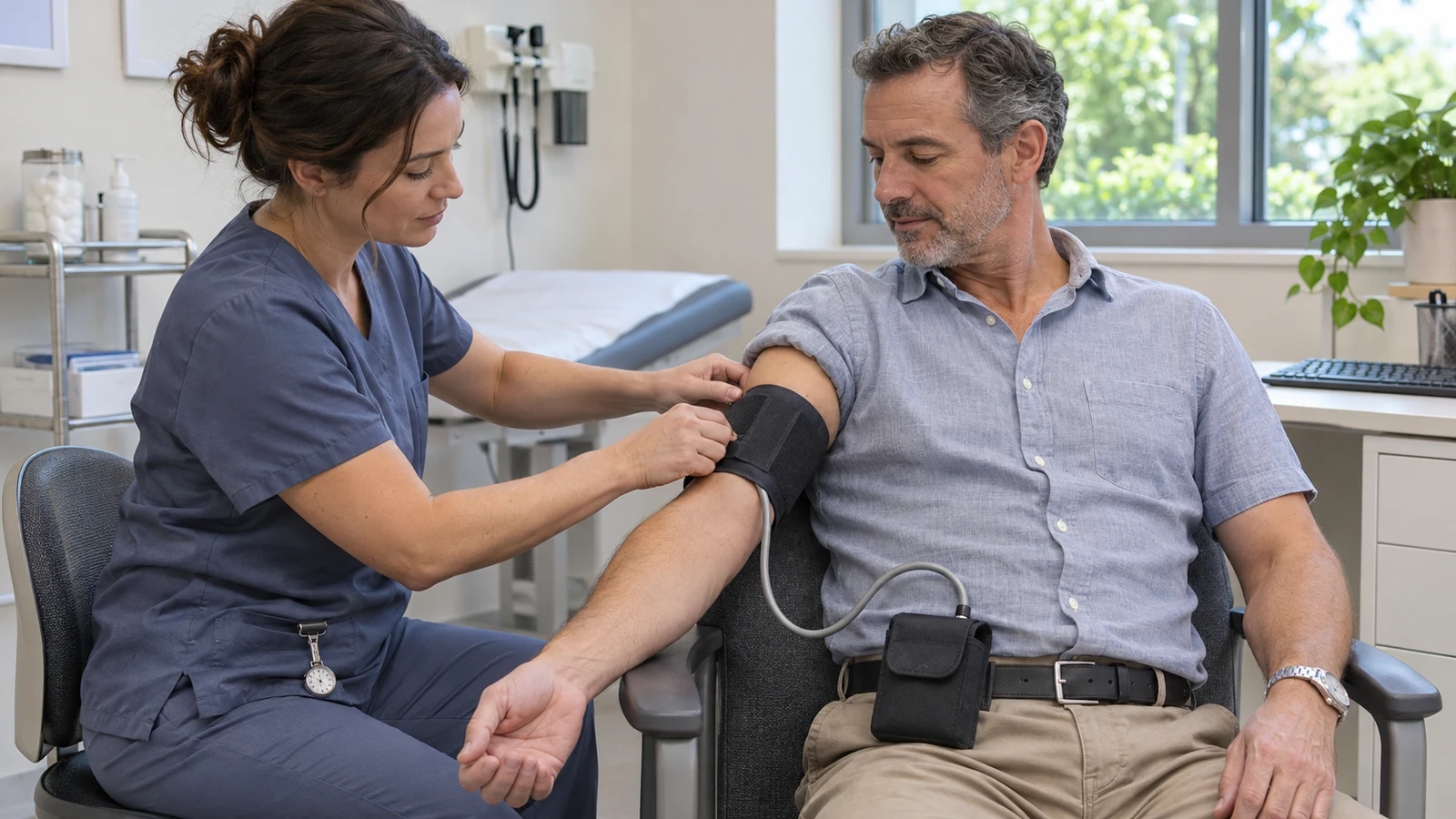
If your clinician asks you to wear a blood pressure monitor for 24 hours, you will usually go home with an upper-arm cuff connected to a portable recorder. The cuff inflates automatically at intervals, including overnight. Multiple readings during your ordinary routine give the clinician more information than one reading in the clinic.
Before the fitting, ask how the recorder will be worn
A loose sleeve makes room for the cuff. The recorder may clip to a belt or sit in a pouch. Before leaving, ask what to do if the cuff slips, the device reports an error, or you need to remove it. Follow the clinic’s instructions on keeping the equipment dry and arranging its return.
Follow your usual routine and note the timing
When the cuff starts to inflate, keep the cuffed arm relaxed and still if it is safe to do so. If your clinic gives you a diary, record when you go to bed and get up, when you take your usual medicines, and any activities or symptoms the clinic asks you to note. If you work nights or sleep at unusual times, write down your actual waking and sleeping hours so the clinic can interpret the readings in context.
Ask which readings were used
NICE guidance uses the average of valid readings taken during usual waking hours to help confirm high blood pressure. At follow-up, ask whether enough usable readings were collected and what the average means alongside your clinic measurement. If the cuff repeatedly woke you or the test day was unusual, mention that when reviewing the report.
References
This article provides general health education. Follow the instructions from the clinic that fits your monitor.