Dry Eyes With CPAP? What a Mask Leak Can Tell You
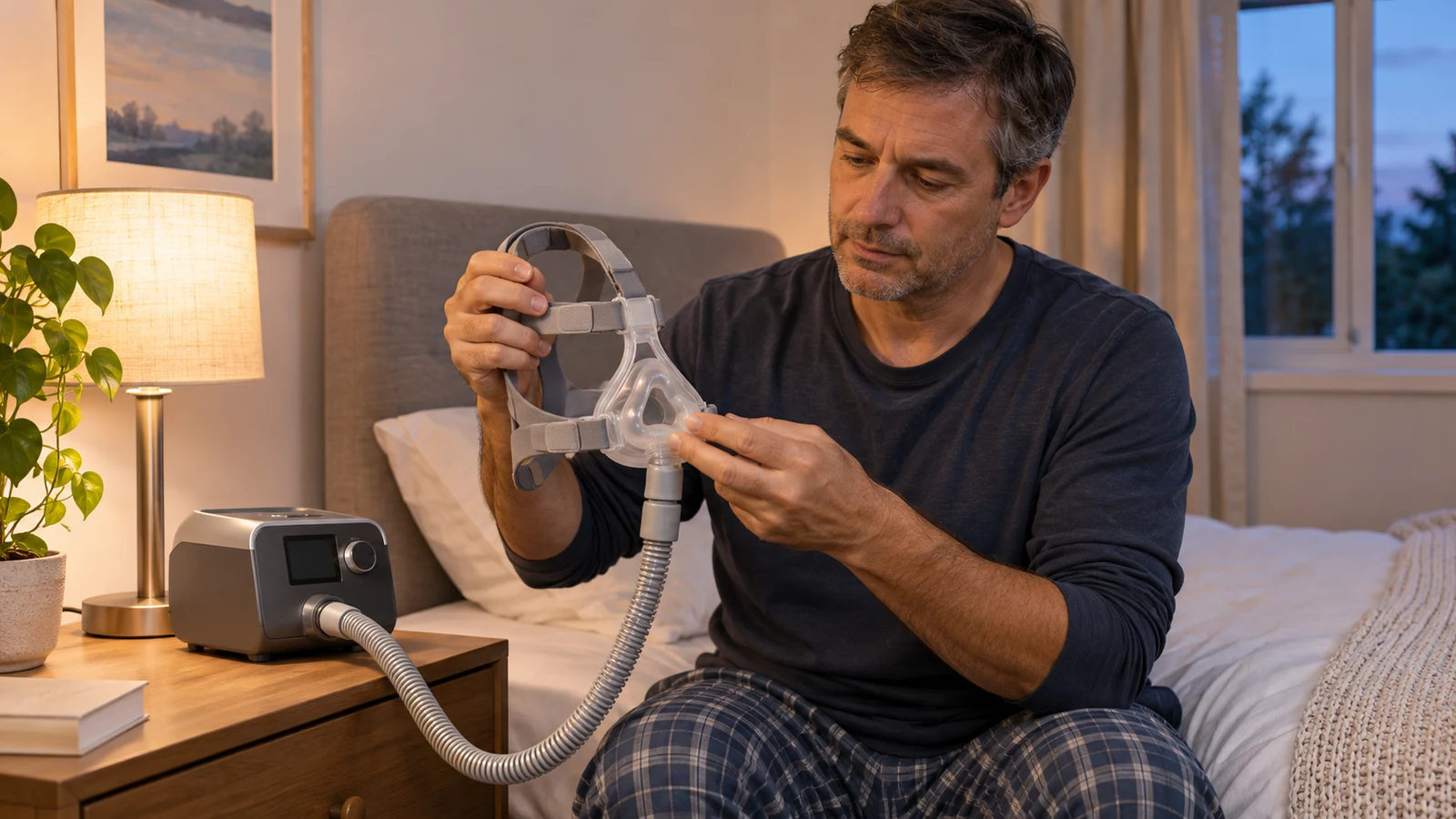
If your eyes feel gritty or watery when you wake up after using CPAP, pay attention to where you feel air coming from the mask. A small stream escaping near the bridge of the nose can reach the eyes. Dry eyes can have other causes, so the timing and location of the airflow are useful details to bring to your care team.
Find out where the air is coming from
CPAP masks are designed to let exhaled air escape through a vent. Keep that vent clear. The airflow to look for is a jet coming from the edge where the cushion meets your skin, especially if it points toward an eye. While awake, put the mask on as instructed, turn on the machine, and try lying in your usual sleep position. Notice whether turning your head changes the sound or direction of the air, or whether the hose pulls the mask sideways.
Check the cushion before tightening the straps
With the mask off, look for a folded edge, a crack, or a cushion that has become stiff. Follow the manufacturer’s fitting and cleaning instructions. A mask can still leak when it is pulled tight, and excessive strap tension can leave sore spots. If the seal remains poor or the fit changes when you lie down, ask your equipment provider to check the cushion condition, mask size, and fit. Bring the mask so you can show where you feel the air.
Bring a short description to your next check-in
Even a few observations can help. Was it one eye or both? Did you feel air when you turned onto your side? Did the machine show a leak message? Your sleep team can interpret a leak report for your particular device and help you decide whether the mask fit needs attention. Speak with the team before changing your prescribed pressure or stopping CPAP. If eye irritation persists after the fit is checked, ask an eye care professional about other possible causes.
References
This article provides general health education. Your sleep care team can help with equipment and treatment decisions.