Lightheaded When You Stand? What a Blood Pressure Check Can Show
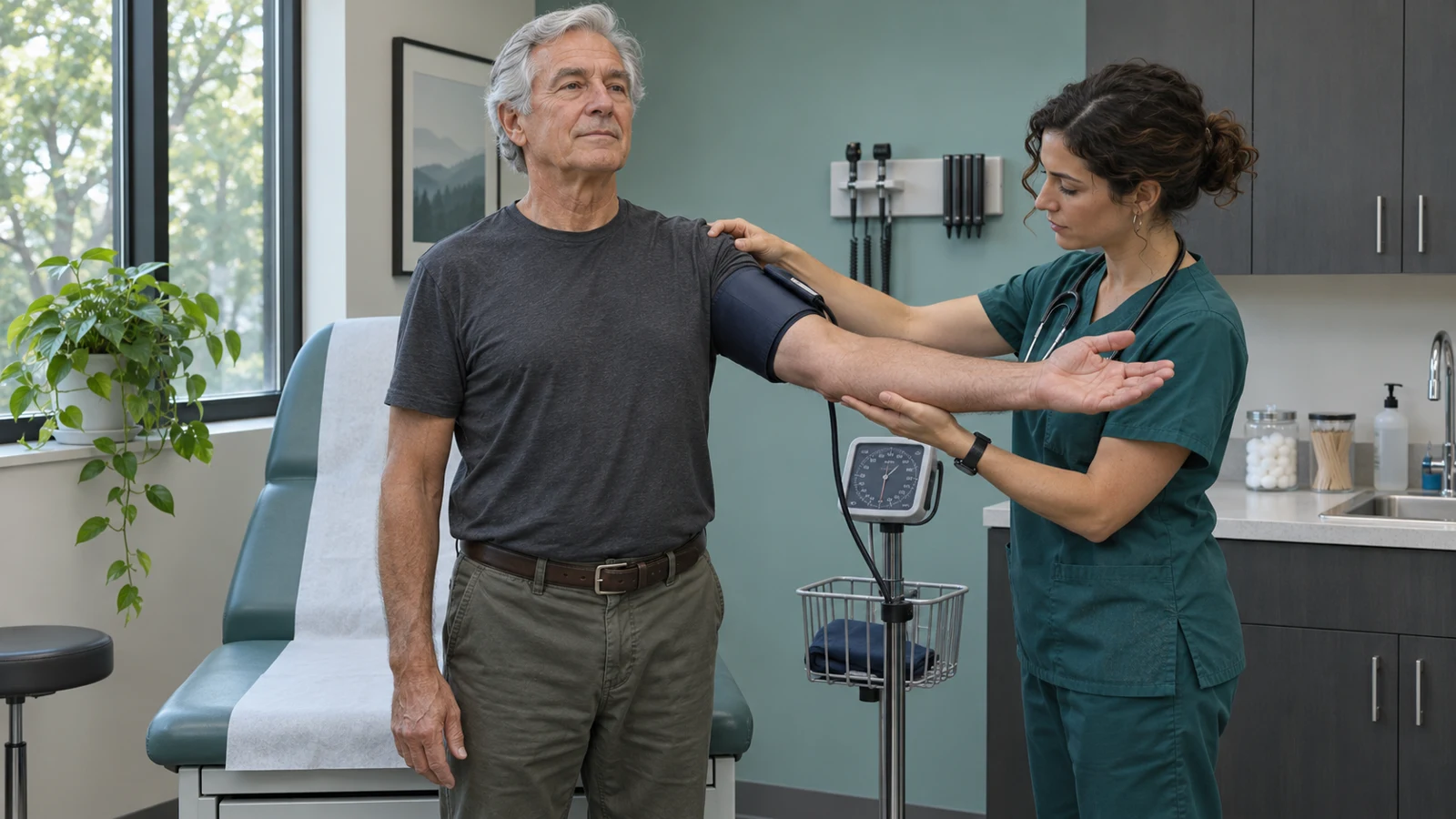
Standing up and briefly feeling faint can make an ordinary morning feel unsteady. If this happens repeatedly, describing exactly when it starts and what it feels like can help a clinician decide whether to check how your blood pressure changes with posture.
Notice what you feel and when it starts
Lightheadedness can feel like you might pass out. A sense that the room is spinning is a different description, even though people often call both sensations dizziness. At an appointment, explain what happened in your own words. Did it start as soon as you stood, after you had been upright for a while, or during a different movement? How long did it last? Did sitting back down help?
What the clinician measures
A clinician may measure blood pressure and pulse after a few minutes of lying down, then repeat those measurements after you stand. The CDC's fall assessment protocol checks at one and three minutes and records symptoms alongside the readings. That comparison helps assess for orthostatic hypotension, a drop in blood pressure on standing. A single seated reading does not capture the change with posture.
Timing, medication, and other health conditions can affect the results. The American Heart Association notes that symptoms and measured drops do not always occur together. A clinician can interpret the result alongside your history and decide whether more evaluation is needed.
Bring a short record to the visit
Note the time of day, what you were doing before you stood, how long the feeling lasted, and whether you fell or nearly fell. Bring your current medication and supplement list, including recent changes. If standing makes you feel faint, sit or lie down where it is safe. Avoid deliberately triggering symptoms while alone and discuss recurring episodes with a clinician before changing your medication.
References
This article provides general health education. A qualified clinician can assess your symptoms and discuss care options with you.