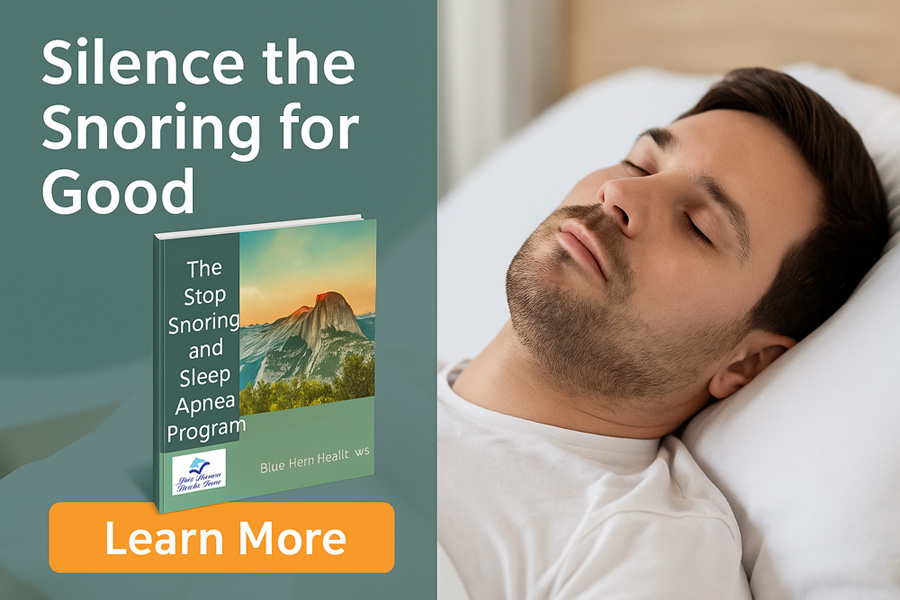
The Stop Snoring And Sleep Apnea Program™ a well-researched program created to help stop snoring and sleep apnea so that you can have a good night sleep. The techniques that you will learn from this program works immediately. It will only take you 3-7 minutes to perform these simple exercises that the author has recommended but the results that you will get will help you have a good night sleep as soon as tonight. Within a week, snoring will be a thing of the past.
How can one differentiate between primary snoring and sleep apnea?
Great question! Differentiating primary snoring from sleep apnea is important because while both involve noisy breathing during sleep, their causes, severity, and health implications differ significantly. Here’s how to tell them apart:
1. What is Primary Snoring?
Snoring caused by the vibration of relaxed tissues in the throat during breathing.
Usually no breathing pauses or significant oxygen drops.
Often considered a benign condition.
Common and may be worsened by factors like alcohol, nasal congestion, or sleeping position.
2. What is Sleep Apnea?
A sleep disorder characterized by repeated pauses in breathing (apneas) or shallow breathing (hypopneas) during sleep.
These pauses cause oxygen levels to drop and brief awakenings, disrupting sleep.
Most common form is Obstructive Sleep Apnea (OSA), caused by airway blockage.
Can lead to serious health risks if untreated (high blood pressure, heart disease, daytime fatigue).
3. Key Differences
Feature Primary Snoring Sleep Apnea
Breathing Pauses No significant pauses Repeated pauses or shallow breathing
Oxygen Levels Normal Drops during apneas
Daytime Symptoms Usually none or mild (e.g., dry mouth) Excessive daytime sleepiness, fatigue, difficulty concentrating
Snoring Sound Continuous, loud snoring Snoring interrupted by gasps or choking sounds
Sleep Quality Generally good sleep Fragmented sleep, frequent awakenings
Health Risks Minimal Increased risk of hypertension, stroke, heart problems
Diagnosis Often based on history and examination Requires sleep study (polysomnography)
4. Signs Suggesting Sleep Apnea (vs. Primary Snoring):
Loud snoring with gasping or choking noises
Witnessed breathing pauses by a bed partner
Excessive daytime sleepiness or fatigue
Morning headaches
Difficulty concentrating or memory problems
High blood pressure or arrhythmias
Mood changes like irritability or depression
5. Diagnosis
Primary snoring usually diagnosed by history and physical exam.
Sleep apnea requires a sleep study (in-lab polysomnography or home sleep apnea test) to measure breathing, oxygen levels, heart rate, and sleep stages.
6. When to See a Doctor
If snoring is loud and accompanied by any signs of sleep apnea.
If you experience daytime fatigue, morning headaches, or witnessed breathing pauses.
Would you like guidance on next steps for diagnosis or treatment options for either condition?
Throat and tongue exercises, often called oropharyngeal exercises or myofunctional therapy, offer several benefits for managing obstructive sleep apnea (OSA) by strengthening the muscles around the airway. Here’s how these exercises help:
1. Strengthen Airway Muscles
Exercises target the tongue, soft palate, throat, and facial muscles.
Stronger muscles reduce airway collapse during sleep, decreasing obstruction.
2. Reduce Severity of Sleep Apnea
Studies show regular practice can lower the apnea-hypopnea index (AHI) the number of breathing interruptions per hour.
This leads to fewer oxygen drops and better sleep quality.
3. Improve Snoring
Muscle tone improvement reduces the vibration of soft tissues, decreasing snoring loudness and frequency.
4. Enhance Breathing Control
Exercises promote better control of tongue position and breathing patterns.
Helps keep the airway open during sleep.
5. Complement or Alternative to CPAP
For mild to moderate OSA or CPAP-intolerant patients, exercises can be an effective adjunct or alternative therapy.
6. Non-Invasive and Low Risk
Exercises are safe, cost-effective, and can be done at home without side effects.
Summary Table:
Benefit Explanation
Muscle strengthening Reduces airway collapse during sleep
Decreased apnea severity Lowers number of breathing interruptions
Snoring reduction Less soft tissue vibration
Improved airway control Better tongue positioning and breathing patterns
Alternative/complementary Useful for mild OSA or CPAP intolerance
Safe and accessible Non-invasive with no significant risks
In brief:
Throat and tongue exercises strengthen airway muscles, reduce sleep apnea severity, lessen snoring, and improve breathing control, offering a non-invasive way to manage or complement treatment for OSA.
Would you like guidance on specific exercises or programs to try?
The Stop Snoring And Sleep Apnea Program™ a well-researched program created to help stop snoring and sleep apnea so that you can have a good night sleep. The techniques that you will learn from this program works immediately. It will only take you 3-7 minutes to perform these simple exercises that the author has recommended but the results that you will get will help you have a good night sleep as soon as tonight. Within a week, snoring will be a thing of the past.

I’m Mr.Hotsia, sharing 30 years of travel experiences with readers worldwide. This review is based on my personal journey and what I’ve learned along the way. Learn more |